
Let’s go back to square one, and answer the question: What is a native plant?
Generally, a native plant is a plant species that has occurred historically in a particular region, ecosystem, or habitat. Often in North America, plants which were present at the time of European arrival are considered native. The concept of native species is also closely linked with that of local adaptation, whereby plants evolved to specific climatic and edaphic (soil) conditions, and in relationship with co-occurring flora and fauna. In contrast are introduced, or non-native plants, which have established in a location outside their native range by humans. Some, but not all, introduced plants become invasive, meaning they spread aggressively and have negative impacts to natural or human systems.
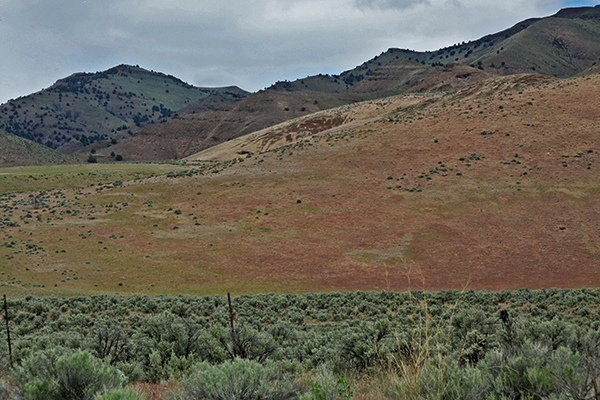
In ecology, however, you often find that there are cases where the reality is not as clear cut as the theory. One example of this is Achillea millefolium, or yarrow. Yarrow has a circumboreal distribution, meaning it is native to the entire Northern Hemisphere. Genetic research supports a distinct lineage of yarrow native to North America1, though hybridization with introduced European lineages complicates the native status of some yarrow populations. In other cases, species that are native to a region are expanding their range to previously unoccupied habitats, negatively affecting them. This is true for some woody species including honey mesquite (Prosopis glanduosa) and Junipers (Juniperus spp.), which have expanded into areas that were historically grasslands due primarily to human-caused factors like unsustainable grazing, fire suppression, and climate change.
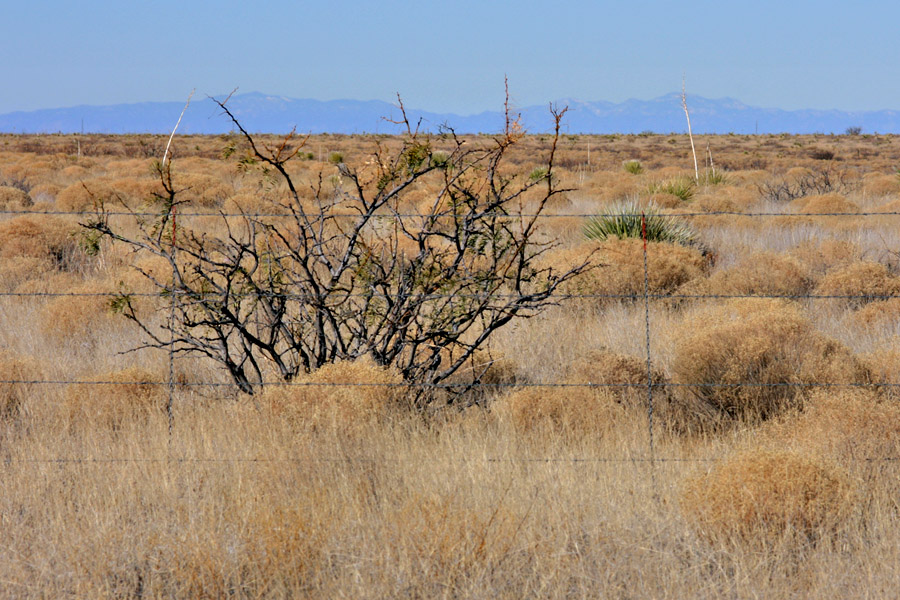
Another complicating factor is scale. What boundaries do we use to determine if a plant is native? We often follow geopolitical lines such as state borders, but natural systems don’t follow those boundaries. For example, if something occurs in one county on the eastern side of a state, would it really be considered native to a completely different ecosystem on the western side? On the other hand, if a species is native to a certain type of habitat, but hasn’t been recorded by western science in a particular location, does that necessarily mean it hasn’t occurred there at some point in the tens of thousands to millions of years for which we don’t have a record? Different researchers and regulatory bodies might answer these questions in different ways.
For many plants, their native status is straightforward, but it’s important to keep these exceptions and questions in mind. This will help us to better understand the ecological niche of different plant species, and avoid black-and-white thinking and overly rigid opinions about what is native.
So, when it comes down to practice, how can we determine what species are native to our particular area? There are a few resources that are invaluable to restoration practitioners and native plant gardeners alike:
1. The Biota of North America Program (BONAP)
BONAP contains county- and state-level distribution maps for vascular plants in North America, which serve as an easy-to-use resource for determining the native range of plant species.
2. SEINet
SEINet allows you to access digitized herbarium data from herbaria across North America. You can search a species to look at its botanical characteristics, photos, and occurrence locations. You can also use the map search feature to see all species located within a defined area.
3. iNaturalist
Using iNaturalist, you can share your observations of plants (or other organisms!) and get help with identification from the community. The app is particularly useful for quickly making georeferenced observations.
4. Southwest Colorado Wildflowers, Ferns and Trees
If you are in the Four Corners region like us, this website is an invaluable resource with great pictures and descriptions of plants in the area, along with thorough comparisons of similar species and interesting facts about the etymology of species’ names. It also contains an extensive bibliography which you can use as a starting point for deeper botanical research.
We hope these resources get you excited about learning the diversity of plant species in your area!
References
- Ramsey, J., Robertson, A., & Husband, B. (2008). Rapid adaptive divergence in New World Achillea, an autopolyploid complex of ecological races. Evolution, 62(3), 639-653.